Electric and magnetic fields
WEHA combines electrical and pulsed magnetic fields to address different water and system conditions.

Physical water treatment
WEHA systems use controlled electrical pulses and pulsed magnetic fields. Coils fitted around the outside of the pipe couple these signals into the water system—without chemicals, salt or contact with the water.
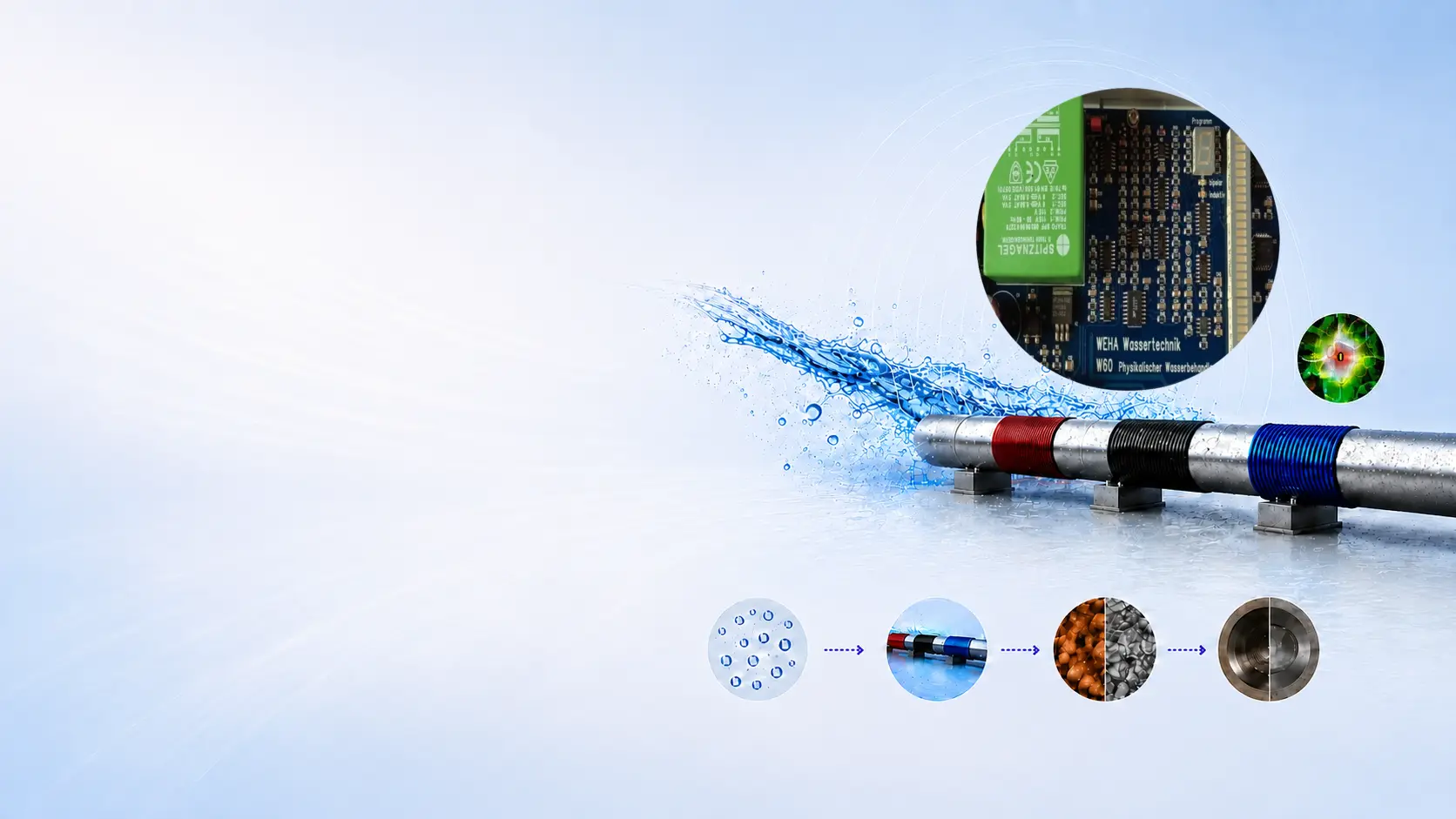
Operating principle
A WEHA system consists of an electronic base unit and a coil system installed specifically around the pipe. The electronics generate electrical impulses with defined waveforms, intensities and frequencies. These impulses are transferred to cables wound around the outside of the pipe.
This creates changing electrical and magnetic fields that act through the pipe wall on the water and its dissolved mineral components without direct contact. The pipe itself is neither opened nor modified.
What distinguishes WEHA
No two water systems are identical. Mineral composition, conductivity, pipework and operating conditions all matter, so WEHA systems offer several signal and coupling options.
WEHA combines electrical and pulsed magnetic fields to address different water and system conditions.
The signal remains active even during low-flow periods or when water is temporarily stationary.
Frequency and waveform can be configured to suit the water characteristics and intended application.
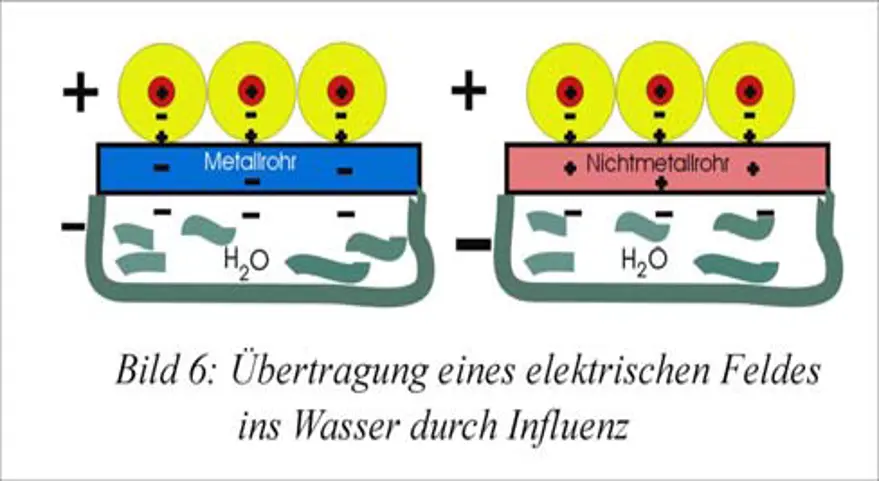
Contact-free transmission
Coils wound around the outside of the pipe generate changing fields within the water system. These fields may influence charged mineral components and the conditions in which crystallisation takes place.
The illustration is schematic. System design depends on the pipe material and diameter, water analysis, flow conditions and operating parameters.
Four stages
The base unit generates defined electrical impulses with varying frequencies and waveforms.
The coil system transfers electric and pulsating magnetic fields through the pipe wall.
The treatment is intended to encourage microscopic crystallisation nuclei to form within the moving water.
Under suitable conditions, minerals can remain as transportable particles in the water instead of forming firmly bonded deposits on equipment surfaces.
General operating principle
These diagrams illustrate the general principle of physical water treatment. Actual results depend on the water and system conditions.
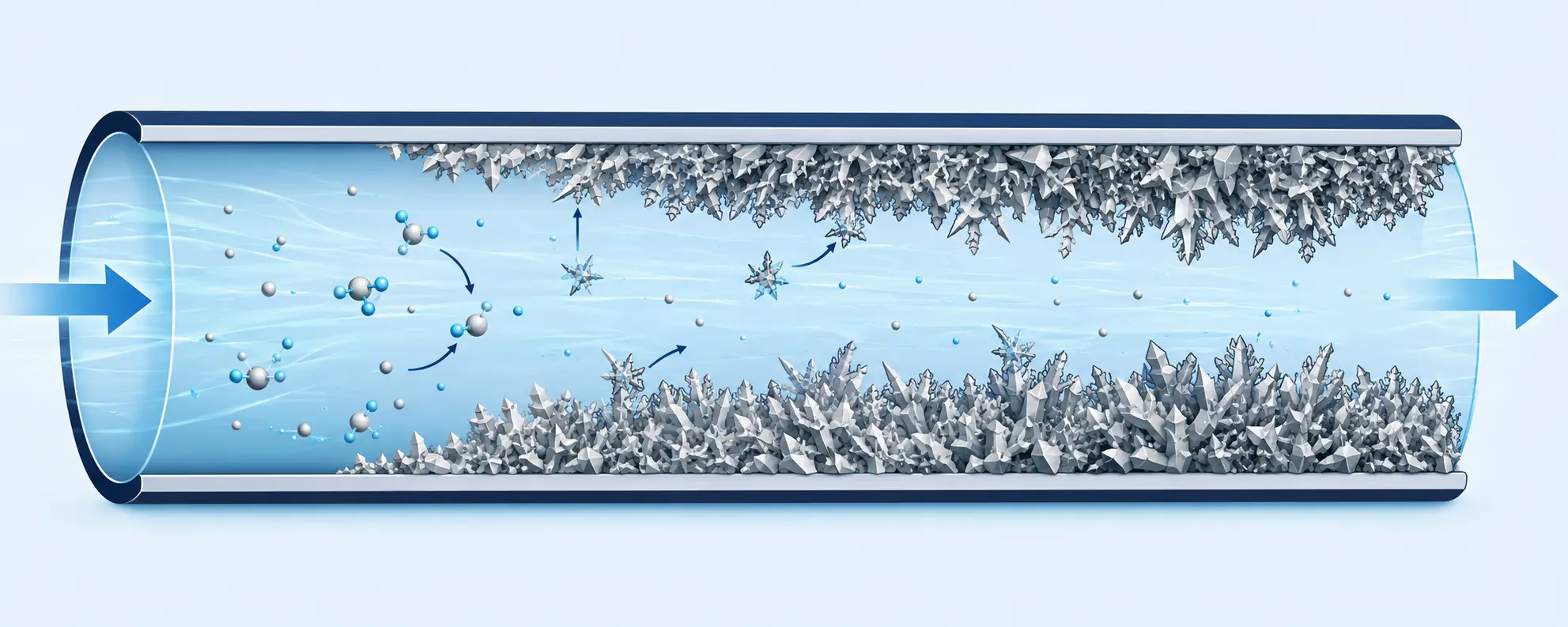
Dissolved hardness-forming minerals can crystallise preferentially on existing nuclei and rough surfaces. Firmly adhering deposits may then form and continue to grow.
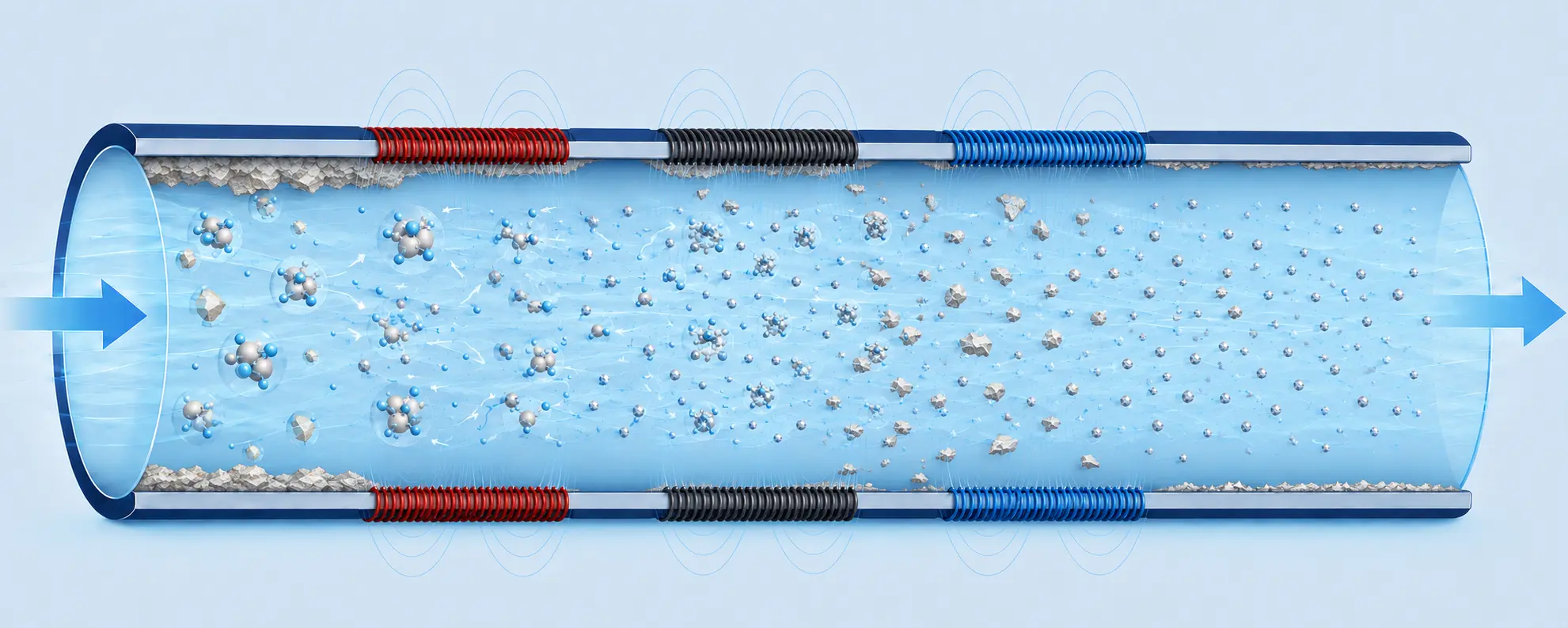
Physical treatment may encourage fine crystal particles to form within the water flow. Under suitable conditions, existing deposits may also loosen gradually.
Schematic representation of the general principle of physical water treatment. Whether and to what extent changes occur depends, among other factors, on water composition, temperature, flow rate, pipe material and system conditions.
Installation & operation
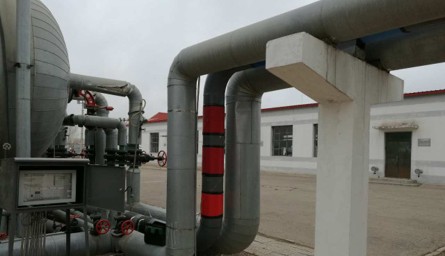
The coils are wound around the outside of the existing pipe. The water does not come into contact with the unit. The base unit, number of coils and winding arrangement are selected for the individual system.
Microscopic level
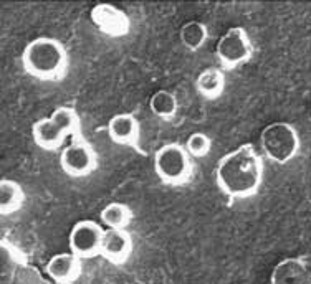
The natural mineral content remains in the water. The aim is to create conditions in which scale-forming minerals are more likely to form fine suspended crystals than firmly bonded layers on technical surfaces.
 11 PAGES · PDF · DE
FURTHER TECHNICAL READING
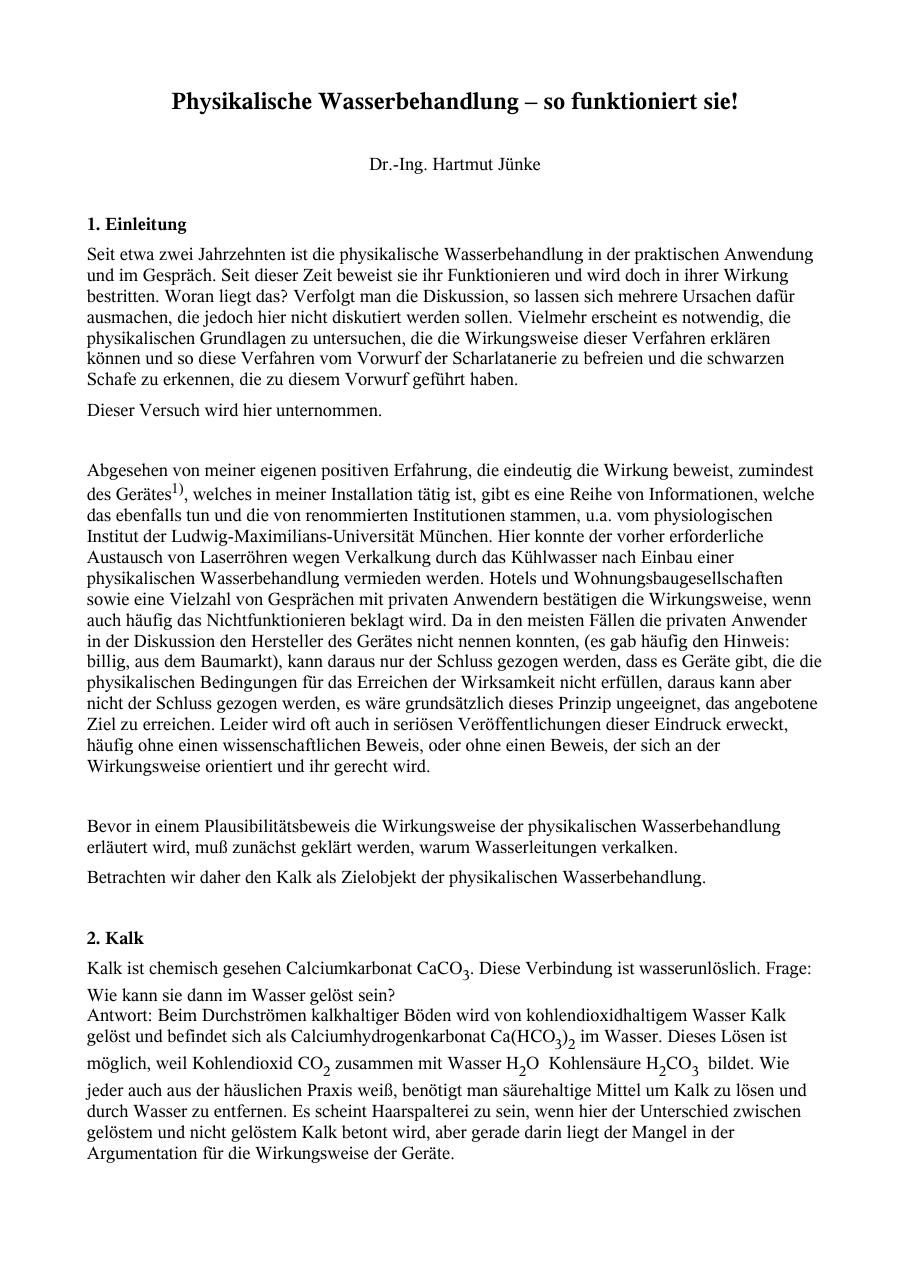
The paper discusses the formation of scale, the calcium carbonate–carbonic acid equilibrium and the physical conditions under which calcium carbonate may crystallise preferentially in the water rather than on pipe walls.
This publication provides further technical background. Individual theoretical explanations reflect the author’s professional view.
READ THE GERMAN PAPER →Technical background & field experience
Background papers, test reports and documented cases provide further insight into the technology and its use in real water systems.